Key Takeaways:
- How long do solar panels last? Modern panels can remain operational for 25 to 30 years or longer, with output declining gradually rather than stopping at a fixed age.
- Performance typically reduces slowly over time, so older panels can still generate a meaningful amount of electricity decades after installation.
- In Singapore, heat, humidity, rainfall, roof conditions, and installation quality can all influence how well a system performs over the long term.
- Panels often outlast components such as inverters, so long-term planning should account for maintenance and periodic component replacement as part of normal ownership.
Introduction
One of the questions we hear most often from homeowners and businesses looking at solar is simple: how long do solar panels last?
It is a fair question, especially when a solar system is expected to deliver value over many years. The answer affects more than the warranty period. It also shapes expected electricity savings, future maintenance, replacement planning, and the overall return from the system.
From what we see in practice, though, solar panels are better viewed as long-life equipment rather than products with a fixed expiry date. They do not usually reach year 25 and suddenly stop working. Instead, their output declines gradually, while other parts of the system may need attention earlier.
That is why we look at solar panel lifespan in terms of long-term performance, durability, and how well the system continues to serve the property over time.
How Long Do Solar Panels Last in Singapore?
Modern solar panels are built for long-term use rather than a fixed service window. Singapore’s Energy Market Authority (EMA) states that solar PV systems are designed to last for at least 30 years. Warranty periods vary by component, with most solar panels covered for around 25 to 30 years, while inverters generally have shorter warranty periods.
The US Department of Energy gives a similar indication of longevity, placing the average operational lifespan of solar panels at around 25 to 35 years. This should be treated as an industry expectation rather than a guaranteed service life for every panel, since actual performance depends on the equipment, installation, operating conditions, and maintenance over time.
That does not mean a panel should be replaced the moment its warranty ends. Performance warranties are mainly there to indicate how much generating capacity the manufacturer expects the panel to retain over time. In many cases, a panel can continue producing useful electricity well beyond year 25, provided it remains in good physical and electrical condition.
When we discuss lifespan with our clients, we therefore focus less on the warranty end date and more on how long the system is likely to remain useful for the property. For a homeowner who expects to stay in a landed home for another 10 or 15 years, the priority may be reliable generation throughout that period. For a commercial owner taking a much longer view, gradual performance loss and future component replacement carry more weight when assessing the overall solar energy cost.
How Does Solar Panel Performance Change Over Time?
Solar panels do not usually lose performance suddenly. Instead, their output declines gradually as they age, a change measured by the solar panel degradation rate. The US Department of Energy notes that PV module efficiency typically degrades by about 0.5% per year, although actual performance can vary depending on panel quality, climate, maintenance, and operating conditions.
This is a useful reminder that an older panel is not necessarily an ineffective one. Even after decades of operation, a well-performing system can still make a meaningful contribution to the property’s electricity needs.
We factor this into the way we assess solar panels for business, particularly for commercial properties with steady daytime electricity demand. A warehouse, factory, or office building may be evaluating solar partly on how much grid electricity it can offset over many years, so looking only at day-one generation gives an incomplete picture. We also consider how expected output may change as the system ages and whether it can continue covering a worthwhile share of the property’s electricity consumption later in its life.
The same thinking applies to homes. A system with some headroom in its initial generation may absorb gradual performance loss with little noticeable effect for many years. By contrast, one that is sized very tightly against current usage has less flexibility as output declines, which is why long-term planning matters just as much as initial capacity.
What Affects Solar Panel Durability in Singapore?
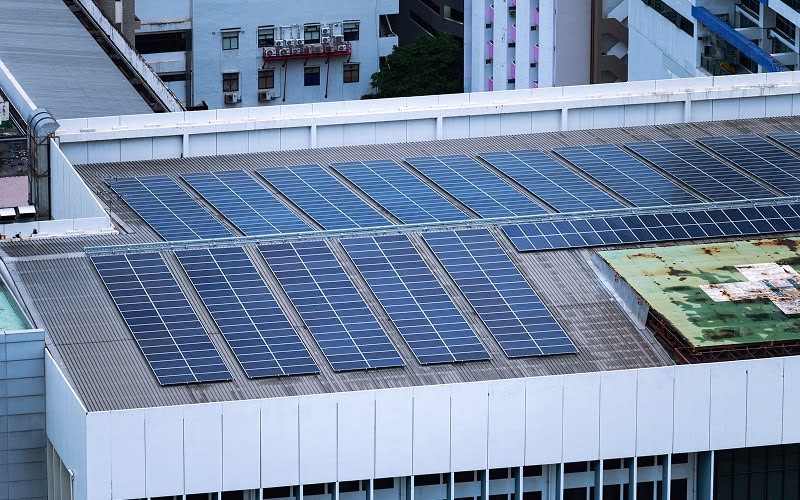
Singapore offers strong conditions for solar generation, with the Energy Market Authority reporting average annual solar irradiance of around 1,580 kWh/m². At the same time, rooftop systems here operate in a demanding environment, with high temperatures, humidity, heavy rainfall, and prolonged exposure to strong sunlight.
The absence of moving mechanical parts helps solar panels last for many years, but solar panel durability still depends on how well the equipment and installation are able to handle these conditions over time. Heat is especially important because panel efficiency tends to fall as operating temperature rises. EMA notes that rooftop panels are typically installed with space beneath them to allow airflow, which helps with cooling.
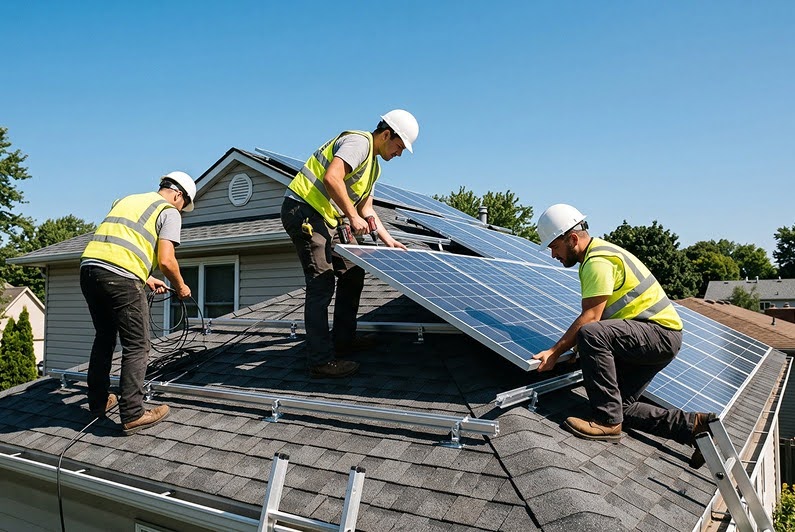
For us, this is why rooftop design is about more than fitting the highest possible number of panels into the available space. Mounting layout, ventilation, roof shape, access routes, shading, and nearby equipment all influence how practical the system will be to operate and maintain over the long term.
On a residential solar panel project, for example, a roof may initially look large enough for a certain number of modules. Once water tanks, vents, roof edges, access requirements, and shaded areas are factored in, the truly usable area can be smaller. In those situations, we would rather use the sections that support reliable long-term performance than push for a larger headline capacity that introduces avoidable compromises.
Which Solar System Components May Need Replacing Earlier?
The panels themselves may continue working for decades, but they are only one part of a solar panel system. Other components have shorter service lives, so it is sensible to account for maintenance and replacement costs from the outset rather than treating them as unexpected failures later on.
Inverters are a good example. They convert the direct current generated by the panels into alternating current that can be used by the property. EMA states that inverter warranties typically range from 5 to 12 years, which is notably shorter than the expected operating life of the panels.
For that reason, replacing an inverter after a decade or more does not mean the entire solar installation has reached the end of its life. We see it as a normal part of long-term ownership, much like replacing individual components in other building systems while the wider system remains serviceable.
This is also why we encourage clients to look beyond the upfront installation price when comparing quotations. Inverter quality, warranty support, monitoring capability, servicing access, and the ease of future repairs can all influence what the system costs to own over 20 or 30 years. This distinction matters when considering how long solar panels can last because the panels may continue generating electricity even after another system component needs to be repaired or replaced. The working life of the panels and the maintenance cycle of the wider system are therefore not always the same.
Why Do Panel Quality and Installation Standards Matter?
Two solar installations with similar capacity on paper can age very differently because panel specifications are only part of the picture. The quality of the installation also affects how well the system deals with heat, water exposure, electrical loads, roof movement, and routine maintenance over many years.
In our work, we look at module quality, mounting design, cable management, electrical configuration, ventilation, roof condition, maintenance access, and monitoring as parts of the same system. A good installation should perform well when it is new, but it should also remain straightforward to inspect, troubleshoot, and service as it gets older.
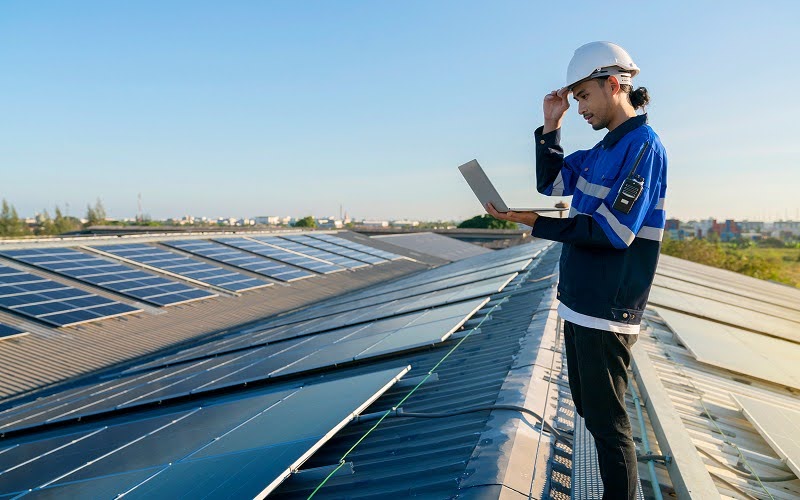
EMA recommends regular inspections, cleaning where needed, performance monitoring, and electrical safety checks as part of ongoing maintenance. It also notes that proper operation and maintenance can affect both system longevity and return on investment.
Monitoring becomes especially useful later in the system’s life because a drop in output is not always caused by normal ageing. In practice, reduced generation may be linked to new shading, dirt build-up, inverter problems, or another fault that can be addressed. Being able to tell the difference between gradual degradation and a correctable issue helps owners avoid writing off lost performance too quickly.
How Should You Plan for a Solar System That Lasts Decades?
So, how long do solar panels last? In many cases, a well-selected and properly installed system can continue producing electricity for 25 to 30 years or more. Output will gradually decline over time, and components such as the inverter may need replacing earlier, but that does not mean the panels themselves have reached the end of their useful life.
At PMCE, we look at longevity as a whole-system issue rather than a panel specification alone. Equipment quality, roof conditions, system layout, maintenance access, expected degradation, and future component replacement all influence how well the installation continues to perform over the years.
If you are considering solar for your home or commercial property, contact PMCE for an assessment of your roof, electricity usage, and long-term system requirements. We can help you plan a system that is built around reliable performance and practical value over the long term.