If you run a business in Singapore, you have probably asked the question out loud at least once this year: how long is the Singapore energy crisis going to last? Every quarter the electricity bill lands, every quarter it seems to tell a slightly different story, and every quarter a clear answer feels further away.
Here is the honest version of that answer – and the reason it is actually good news for businesses willing to act. In March 2026, Coordinating Minister Chan Chun Sing framed the decade ahead like this:
If water has been the existential challenge for the last 50 years, clean, renewable and sustainable energy will be our existential challenge for the next 50 years. – Coordinating Minister Chan Chun Sing, World Water Day, March 2026
Two months later, Prime Minister Lawrence Wong told the Energy Market Authority’s 25th anniversary dinner the same thing in fewer words:
The next 25 years will be even more challenging than the last. – Prime Minister Lawrence Wong, EMA 25th Anniversary, May 2026
Read those two sentences together and the question changes. It is not really “when will prices go back to normal?” It is “how do we run a business in a country where secure, affordable power is the defining challenge of the next half-century?” This article answers both – honestly.
First: what is driving the Singapore energy crisis
Singapore runs on imported gas. About 95% of our electricity is generated from natural gas, and with almost no domestic energy resources, nearly all of that gas is imported – piped from the region and shipped in as LNG. Its price is tied to global oil and gas markets, so when the world’s energy markets move, Singapore’s bills move with them. We are watching that happen right now: as conflict in the Middle East pushed up global fuel prices through 2026, the Energy Market Authority warned that “household and business consumers must therefore be prepared for higher and more volatile energy costs,” and Deputy Prime Minister Gan Kim Yong told Parliament to expect “a much sharper increase in the next tariff adjustment.” It is not the first time – in 2021-2022, the daily wholesale price climbed above S$1,800 per MWh and at least six electricity retailers collapsed, pushing their customers back onto the grid at higher rates – and it will not be the last.
Demand is rising, not flattening. The EMA now projects peak electricity demand to grow between 2.4% and 4.8% a year through 2034, and consumption already rose about 4% in 2024. The biggest new driver is digital: data centres. They already use roughly 7% of Singapore’s electricity, and with the AI boom that share is widely expected to climb toward 12% by the end of the decade. Across Southeast Asia, the International Energy Agency expects data-centre electricity demand to more than double by 2030. (We unpack what that means for your bill in our next piece on the data-centre boom.)
Supply is tight by design. Singapore is small, land-scarce and resource-poor. Some of the region’s piped-gas contracts begin expiring around 2027-2028, which will push us further onto global LNG. And the EMA has warned that if demand grows at the top of its range, the country’s spare generation capacity could fall below the required level from 2031 – which is why new power plants are already being tendered. None of this is a crisis that simply blows over. It is the new baseline.
So – how long will it last?
No one can give you a date, and you should be sceptical of anyone who does.
What we can say is this: the era of cheap, take-it-for-granted electricity is not coming back. The regulated tariff is reviewed every three months and it does move both ways – it actually eased through 2024 and 2025 from the 2022-2023 peak. But the sharper increases the regulator warned of have now landed: for the third quarter of 2026, the tariff jumped about 17% to 31.91 cents per kWh – a record high – as the Middle East-driven spike in global gas prices fed through to bills. That is the pattern in one line: long stretches of creep, punctuated by sharp jumps you cannot predict. The trend beneath it points one way: structurally higher, and more volatile, for longer.
Singapore’s own plan is a multi-decade one. The country is pursuing what the EMA calls its “four switches”: natural gas for now; more solar; electricity imported from the region (a target of around 6 gigawatts of low-carbon power by 2035); and longer-term bets such as hydrogen – which the government believes could supply up to half of Singapore’s power by 2050 – and a serious study into advanced nuclear. These are real, and they will help. But every one of them is measured in years and decades, and most add cost before they remove it. That is the timeline you are planning against.
What “after the crisis” actually looks like
Here is the reframe that matters for your business. “After the crisis” is not a return to cheap power. It is a permanently different grid: lower-carbon and more secure, but also structurally more expensive and more volatile than the one most of us built our cost assumptions on a decade ago.
It is also a grid you will increasingly have to answer for. Sustainability reporting is tightening, and Scope 2 emissions – the emissions from the electricity you buy – are becoming a board-level number, not a footnote.
In that world, energy stops being a background cost and becomes a strategic variable. It splits businesses into two groups: those who keep renting every kilowatt-hour from a rising market, and those who quietly took control of part of their own supply while it was still a choice. The second group spends the next decade insulated from exactly the volatility the first group keeps absorbing.
What you can control right now
You cannot fix the national grid, change the price of LNG, or slow the data-centre boom. But you can change your own exposure – and the main lever is closer than you think.
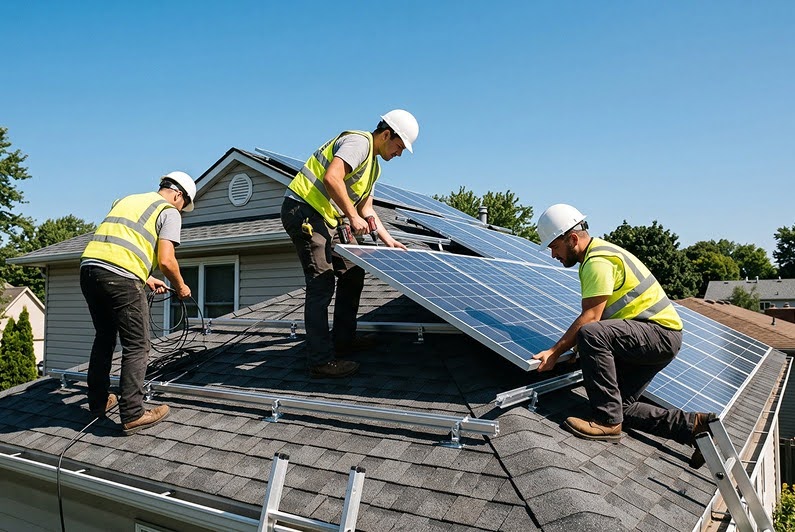
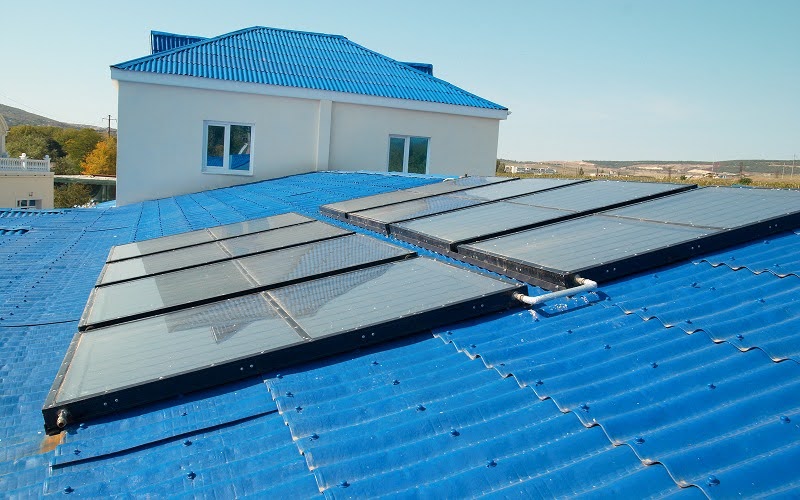
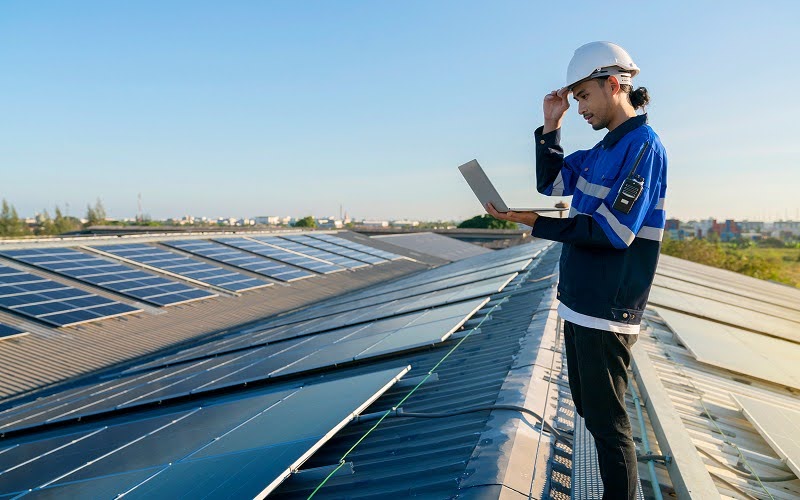
It is the roof you already own. Rooftop solar turns part of your electricity supply into a fixed, known cost for 25 years or more, instead of a variable you re-discover every quarter. For commercial and industrial users – who consume most of their power in daylight hours, exactly when solar generates – the economics are compelling: payback in roughly three to six years, electricity-bill savings often in the range of 50-80% depending on system size and usage, and a direct cut to your Scope 2 emissions, since every unit of solar you use yourself avoids about 0.4 kg of CO₂ from the grid.
This is not a fringe bet, either. In 2026 Singapore raised its national solar target to 3 gigawatt-peak by 2030 – after hitting its previous 2 GWp goal years ahead of schedule – and the Minister-in-charge of Energy, Dr Tan See Leng, calls solar “our most viable option in the near-term”. For once, the national direction and the smart-business direction are the same direction. (For larger, round-the-clock energy users, there are further ways to manage exposure beyond solar alone – we will cover those in our solar-and-storage guide.)
Singapore energy crisis: The bottom line
The energy crunch is not a weather event you wait out. It is, in the words of Singapore’s own leaders, the challenge of the next 50 years. The price of waiting for it to “end” is paying the rising market rate the entire time. The businesses that come out ahead are the ones that stop asking how long will this last and start asking what can I control – and then act on the part they can.
That part starts with your roof.
The Singapore energy crisis isn’t waiting – and neither should you.
Get a free PMCE energy assessment and we’ll show you exactly what your roof can do: your solar potential, your projected savings, and your payback – at no cost and no obligation. We’ve installed 1,500+ systems across Singapore over 9+ years, with work featured on CNA, TodayOnline and Lianhe Zaobao.
Get a solar quotation today → www.pmce.sg